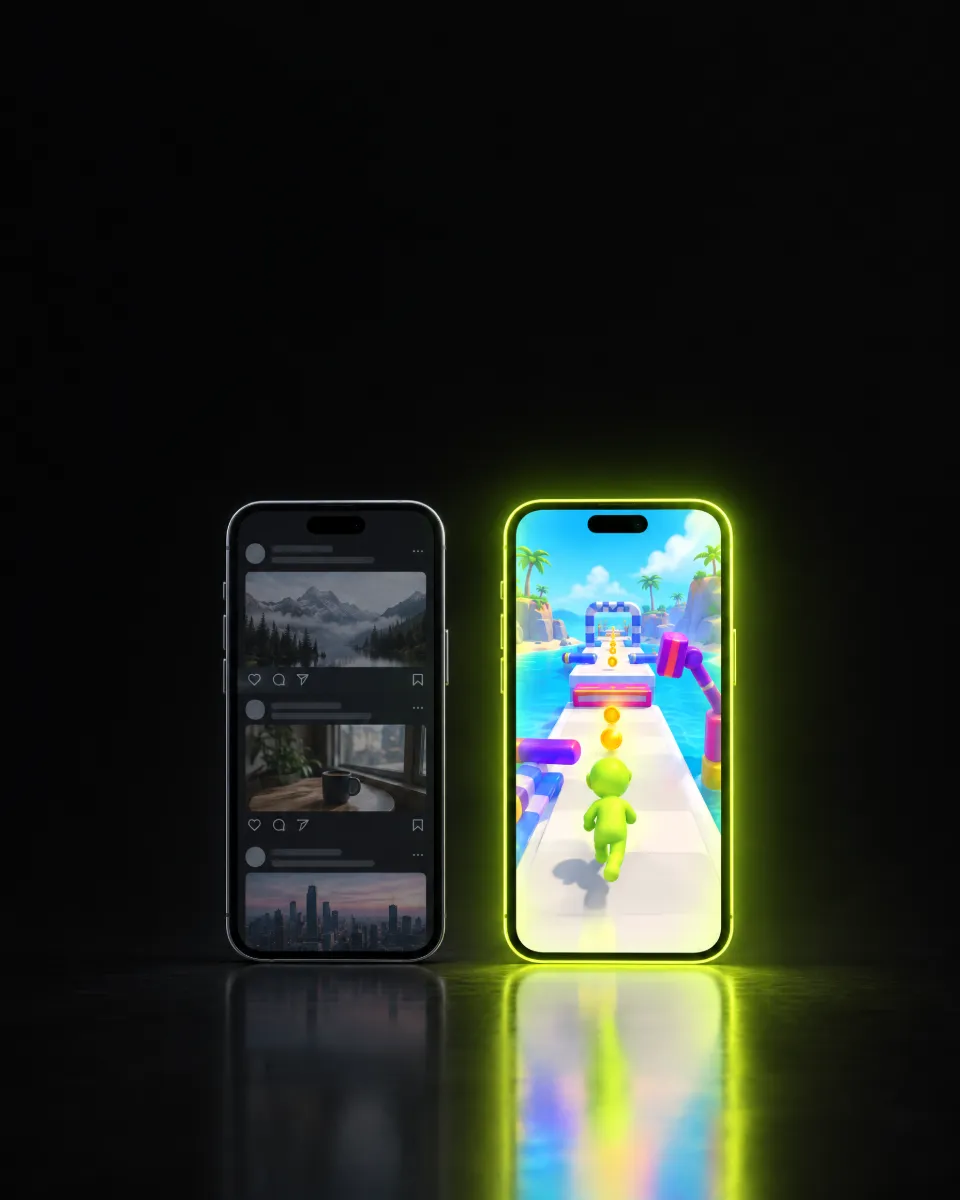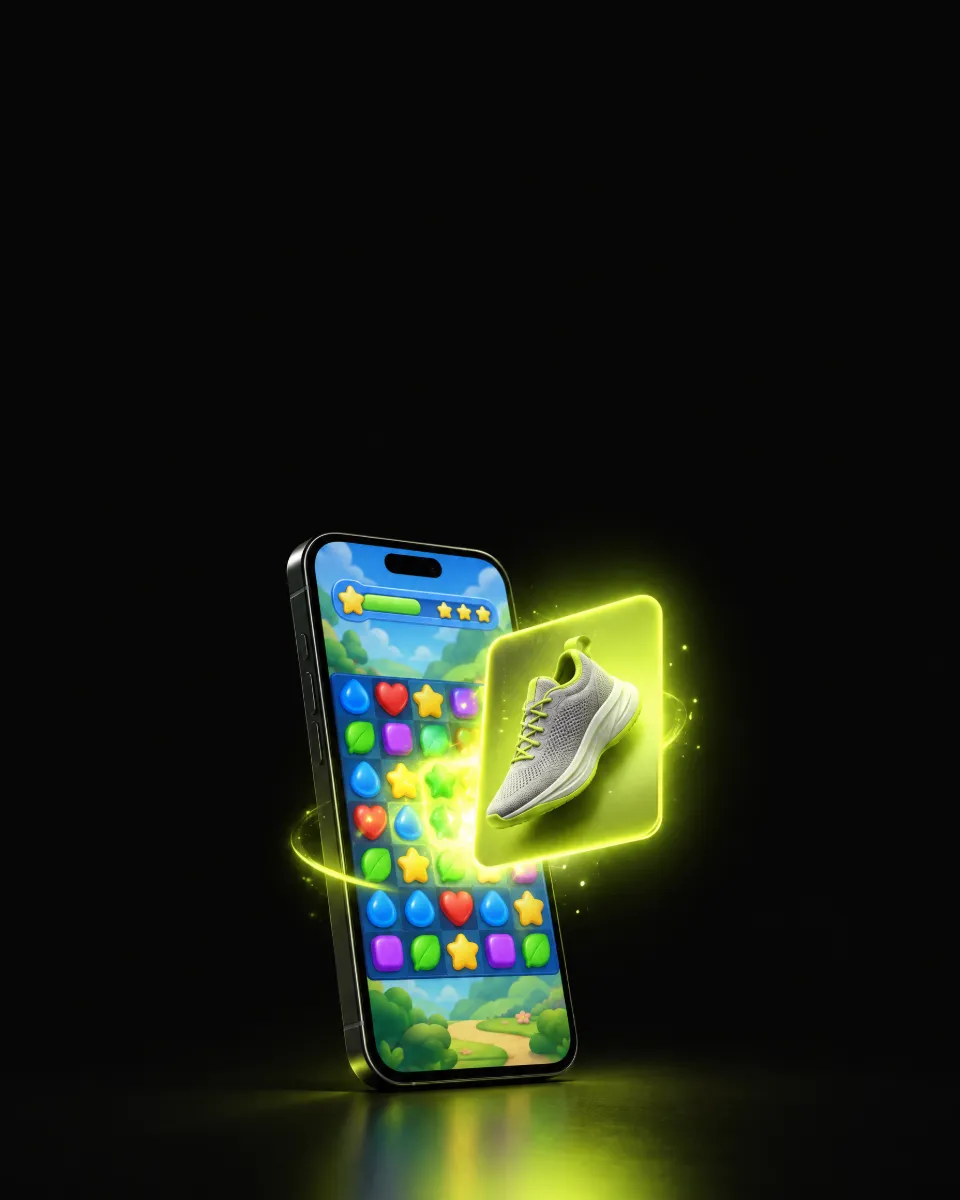
If you run a DTC brand, you have probably heard some version of this in the last few months: "We started testing AppLovin and it is carrying real volume." For most founders the next question is simple. What is AppLovin, and why is an ad platform built on mobile games suddenly working for skincare, apparel and supplements?
This guide answers that in plain terms. No hype, and no claims we cannot back up. Every fact below links to its source at the end of the article.
What AppLovin is
AppLovin describes itself as an end-to-end, AI-powered advertising platform. Its core is Axon, a recommendation engine that decides which ad to show to which person. Advertisers buy through AppLovin Ads, the self-serve platform that was called Axon Ads Manager until June 2026. According to its latest annual report, revenue from that ads business makes up substantially all of the company's revenue.
The inventory is mobile games. When someone playing a game on their phone reaches a natural break, AppLovin can serve a full-screen ad. AppLovin says more than a billion people play mobile games on its platform every day. Think of titles like Subway Surfers, Candy Crush, Sudoku, Solitaire and Words With Friends.
A common misconception: AppLovin is not a game company anymore. It sold its games business in June 2025. Today it is an ad platform whose inventory happens to live inside mobile games.
How ecommerce got here
For years AppLovin was known for app install ads: games advertising other games. In 2024 it began testing ads for ecommerce brands on an invite-only basis. Early pilots were limited to large brands, and Modern Retail reported that the ecommerce business reached a one billion dollar annual run rate by March 2025.
The timeline since then moved quickly:
- June 2025: AppLovin launched a Shopify app for pixel install and catalog sync.
- October 2025: the platform was rebranded around Axon and Ads Manager launched on a referral-only basis with a few hundred advertisers.
- June 22, 2026: the platform opened to every advertiser and was renamed AppLovin Ads. Any business can now sign up.
Advertisers who were already in have kept spending. On its Q2 2026 earnings call in August, AppLovin said consumer advertiser spend hit a record, around 28 percent above its Q4 2025 peak, in what is usually a softer quarter. Quarterly revenue was $1.92 billion, up 53 percent year over year.
How AppLovin ads work
An ecommerce ad on AppLovin runs in three stages:
- A full-screen vertical video. Videos are 9:16 and can run up to 60 seconds. Depending on the placement, the skip button is delayed, so many viewers watch far more of your video than they would in a social feed. AppLovin reports a median engagement of about 35 seconds.
- An interactive page. After the video, the viewer sees an AppLovin Interactive Page, effectively an end card. It can be a simple image or an HTML page built in AppLovin's Creative Studio.
- Dynamic product ads. If your catalog is synced, AppLovin can show products from your store.
Ads appear during breaks in gameplay, roughly every two to five minutes according to AppLovin. That context matters. The person is relaxed and has a few minutes, which is why longer, story-driven videos often do well here.
Targeting without targeting
This is the biggest mental shift for teams coming from Meta. On AppLovin there is no interest targeting, no demographic targeting, no lookalikes and no keywords. You pick:
- A goal: a return on ad spend target, a cost per purchaser target, or leads for a few service categories.
- An audience strategy: Universal, Prospecting (new customers only) or Discovery (people who have never visited your site).
- Geography: countries, and within the US, states or metro areas.
Everything else is decided by Axon, using your purchase data. Bidding is automatic and you are billed on impressions. One brand operator quoted by AdExchanger in August put it bluntly: no audience controls, no keyword strategies, no bells and whistles.
That sounds limiting, but it shifts your job to the two things that actually move results on AppLovin: clean purchase data and a lot of good creative. We cover creative volume in detail in our launch checklist.
How purchases are tracked
Axon can only optimize toward purchases it can see, so tracking comes first. There are three pieces:
- The AppLovin pixel. Install it through the free AppLovin Shopify app (as a theme app embed) or through Google Tag Manager. Headless Shopify stores may need the GTM route.
- Standard events. page_view, view_item, add_to_cart, begin_checkout and purchase are the ones that matter for ecommerce.
- The Conversion API. A server-side feed that AppLovin recommends running alongside the pixel, with a shared ID so purchases are not double counted.
AppLovin also offers a Pixel Helper extension for Chrome, so you can confirm events are firing before you spend anything.
Who AppLovin works for
AppLovin's published case studies span apparel, beauty, accessories, home, crafts, personal care and shapewear, including brands like Ridge, Kitsch, Dr. Squatch, The Woobles and Honeylove. In our own experience the strongest fits share a few traits:
- A product that demos well on video. If you can show the problem and the result in 30 seconds, you have an AppLovin ad.
- Broad appeal. Mobile gamers are a huge slice of the population: parents, commuters, retirees. Products with mass-market appeal tend to scale further.
- A creative engine. AppLovin rewards volume. Brands that can produce new videos every week have a real advantage.
- Healthy margins and patience. The model needs purchase data to learn. Brands that set a break-even target and give it a few weeks do better than those who judge it in three days.
Some categories are restricted. CBD and hemp products, for example, need express approval from AppLovin and must meet strict product, landing page and state rules.
How to get started
The good news is that the barrier to entry is now low. AppLovin lists a minimum starting budget of $10 a day, and signing up is open to everyone. The honest caveat is that a $10 test will not tell you much. We recommend starting at $500 a day, with a few weeks of runway and a deep bench of creative, so Axon has enough signal to find your buyers.
If you want the practical version, read our step-by-step AppLovin launch checklist. If you are weighing it against your current channel, our AppLovin vs Meta comparison breaks down where each one wins.
Want AppLovin run for you?
Apt is an official AppLovin Partner Agency. We handle tracking, targets and the creative volume the platform rewards, alongside your Meta, Google and TikTok.
Book a free call →Sources
Facts in this article were checked against these sources on September 28, 2026.
- AppLovin blog: AppLovin Ads is now open to all advertisers (Jun 22, 2026)
- AppLovin: Consumer brands
- AppLovin FY2025 annual report summary (Feb 19, 2026)
- Modern Retail: AppLovin rebrands its ad platform as Axon (Oct 1, 2025)
- AppLovin Q2 2026 results press release (Aug 5, 2026)
- AdExchanger: AppLovin asks for patience as it grows its ecommerce business (Aug 6, 2026)
- AdExchanger: AppLovin wants to persuade the world its ad platform is the real deal (Aug 12, 2026)
- AppLovin: Ad specs and requirements
- AppLovin: Designing creatives (Feb 20, 2026)
- AppLovin: Shopify integration
- AppLovin: Conversion API
- AppLovin: Case studies